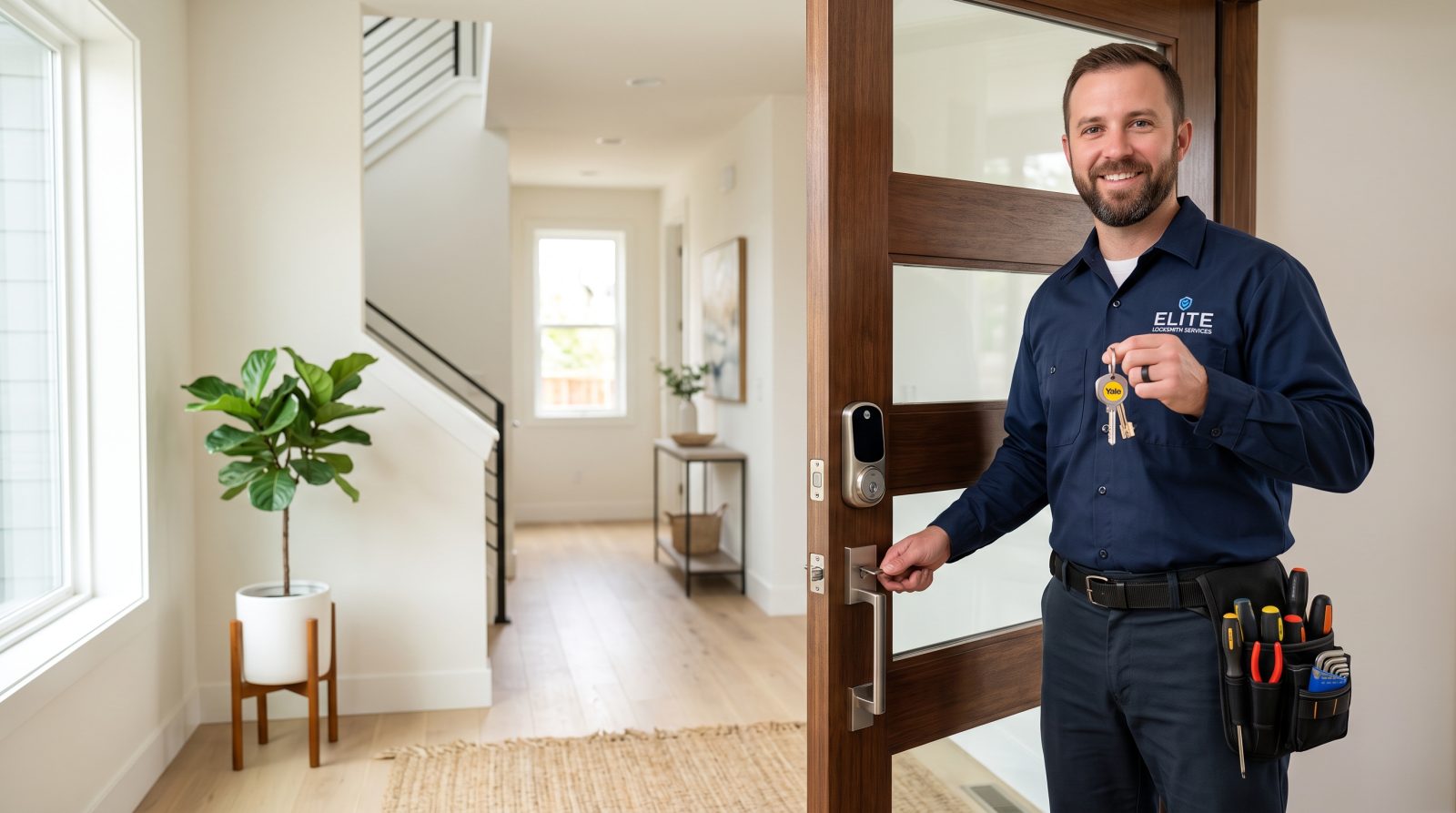
What are the main types of car keys, and how does that change replacement?
The replacement process depends almost entirely on what kind of key your vehicle uses, because newer keys add electronic layers on top of a cut metal blade. Identifying your key type is the first thing a locksmith does, since it determines the tools, equipment, and time involved.
Knowing which category your key falls into helps explain why some replacements are quick and inexpensive while others take longer and cost more.
- Basic mechanical key: A plain cut-metal key with no chip, common on many vehicles built before the mid-1990s. It only needs to be cut to match your lock's pattern, with no programming.
- Transponder key: A metal key with a small radio-frequency chip molded into the plastic head. The chip must communicate with the car's immobilizer, so it has to be programmed in addition to being cut.
- Remote head key (combo key): A transponder key fused with a remote fob that locks, unlocks, and sometimes opens the trunk. Both the chip and the remote buttons require programming.
- Flip key / switchblade key: A transponder-and-remote key where the blade folds into the fob housing. Replacement involves cutting the blade and programming the electronics.
- Smart key / proximity fob: A keyless system where the fob stays in your pocket and you start the car with a push button. These often use a hidden emergency blade and require dealer-level or specialized programming.
- As a rule, the more electronics a key carries, the more steps replacement involves and the more it tends to cost.
How does the car key replacement process work step by step?
Replacing a car key is a sequence of distinct steps, and an automotive locksmith can typically perform all of them at your location with mobile equipment. Understanding the order makes it clear why the job is more involved than copying a house key.
Each stage builds on the last: the key has to physically fit before it can be programmed, and it has to be programmed before the engine will start.
- Verify ownership and gather details: You'll be asked for proof that the vehicle is yours, plus the year, make, model, and often the VIN, which a locksmith reads from the dashboard, door jamb, or your registration.
- Determine the key type and source a blank: The locksmith matches the correct key blank or fob shell for your vehicle, since blanks are vehicle-specific.
- Cut the blade: The key is cut to match your lock, either by decoding the existing lock or, when all keys are lost, by using key codes tied to the VIN.
- Program the transponder chip: Using diagnostic tools connected to the car's onboard computer (OBD-II port), the locksmith pairs the chip with the immobilizer so the engine will start.
- Program the remote functions: If the key has a fob, the lock/unlock/trunk/panic buttons are synced to the vehicle.
- Test everything: The locksmith confirms the key turns the lock, starts the engine, and operates every remote function before finishing.
What does a programmed key actually do, and why won't a cut-only key start the car?
Most modern vehicles use an immobilizer: an anti-theft system that prevents the engine from starting unless it detects an authorized transponder chip. When you insert or bring the key near the ignition, an antenna ring reads a unique code from the chip and compares it to codes stored in the car's computer. If the codes match, the immobilizer releases and the engine can start.
This is why a key that has been cut but not programmed will physically turn in the ignition yet do nothing, or crank without starting. The mechanical cut handles the lock; the chip handles the immobilizer. Both have to succeed.
Smart keys work on the same principle but use short-range radio so the fob never has to leave your pocket. The car detects the fob's signal, confirms the code, and allows push-button start. Because these systems are designed to resist unauthorized keys, replacement is a legitimate, ownership-verified process rather than something that can be done casually.
Is rekeying different from replacing a car key?
Rekeying and key replacement are related but distinct. Replacing a car key means making a new working key to match your existing locks and immobilizer. Rekeying means altering the lock cylinder itself so it works with a different key pattern, which renders the old key useless.
For vehicles, replacement is by far the most common request, since drivers usually want a new key that works with the car exactly as it is. Rekeying a vehicle lock is less common and is typically considered only in specific situations, such as wanting old lost keys to stop working on the door locks.
It helps to think of it this way: replacement keeps the lock and gives you a new key; rekeying changes the lock so old keys no longer fit. A locksmith can explain which approach fits your situation once they see the vehicle, and neither involves any technique that compromises your car's security.
What does a car key replacement typically cost, and what affects the price?
Costs vary widely because they depend on your key type, vehicle, and how the key is sourced. Any figures you see online should be treated as typical ranges, not quotes, and the only way to get an accurate number is to share your vehicle details and request a quote. As a general pattern, a basic non-chip key sits at the low end, while a smart proximity fob for a late-model vehicle sits at the high end and may even require dealer involvement.
Several factors push a replacement toward the higher or lower end of these ranges:
- Key type: A plain mechanical key generally costs far less than a transponder key, which usually costs less than a remote head key or a proximity smart fob.
- Vehicle make, model, and year: Some vehicles use inexpensive, widely available blanks; others use proprietary fobs that are costly to source and harder to program.
- All keys lost vs. having a working key: Programming a duplicate from a working key is usually simpler than originating a key when every key is gone, which may require additional decoding or computer steps.
- Parts and the fob shell: The physical fob and chip are a real material cost, and higher-end fobs raise the total.
- Mobile, on-site service: Coming to your location adds convenience that a counter service doesn't, which can factor into the price.
- Programming complexity: Vehicles with advanced security may need more time and specialized equipment.
- Treat any number you see online as a ballpark only. Request a quote with your exact year, make, and model for a realistic figure.
What information should you have ready before requesting service?
Having a few details on hand makes the quote faster and the visit smoother. Because car key replacement is tied to your vehicle's security, expect to confirm that the car is yours before any work begins.
Gathering these items before you reach out helps a Locksmith San Jose give you an accurate estimate and bring the right equipment the first time.
- Year, make, and model of the vehicle, since the key blank and programming method depend on all three.
- The VIN (vehicle identification number), visible through the windshield on the driver's side dash, in the driver's door jamb, and on your registration and insurance card.
- Whether you still have a working key or all keys are lost, which changes the approach.
- Proof of ownership, such as your registration or title, since a reputable locksmith will verify the vehicle belongs to you.
- Your location and access details, especially if the car is in a garage, lot, or other spot the locksmith needs to reach.
- Any specifics about the key, such as whether it includes a remote, a flip blade, or push-button start.