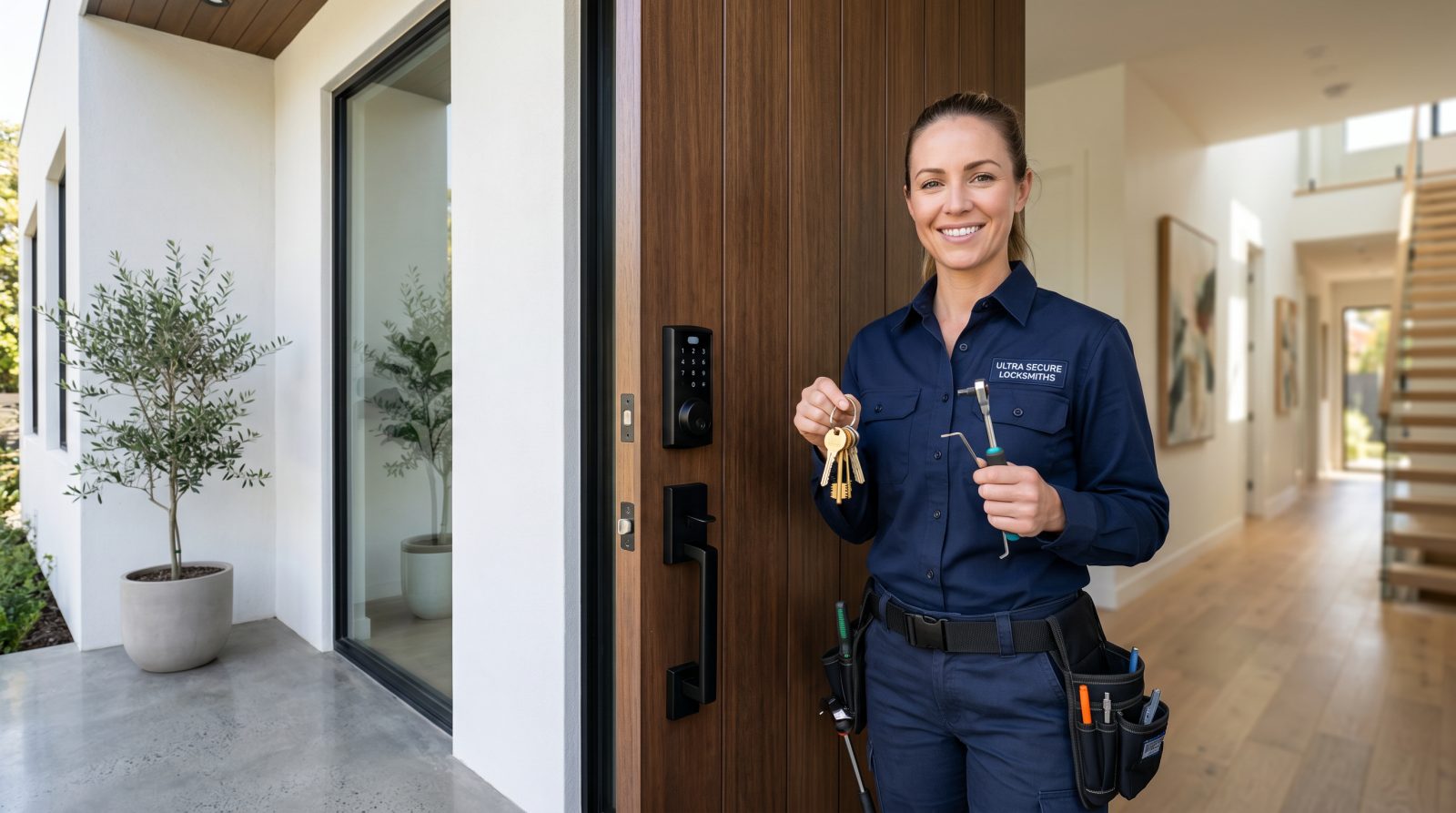
First, stay calm and confirm you're actually locked out
A lockout feels urgent, but rushing is what leads to broken doors, snapped keys, and extra cost. The single most useful thing you can do in the first minute is slow down and confirm the situation before you act on it.
Take a few seconds to check the obvious. People sometimes assume a door is locked when it's simply stuck, swollen from weather, or held by a deadbolt that just needs a firmer turn. Confirming the real problem tells you whether you need a key, a locksmith, or just a shoulder against a sticky door.
- Try the handle again, firmly but without yanking, and try turning your key both directions if you have one.
- Check every other door and any ground-floor windows that may be unlocked, including a garage side door or patio slider.
- Make sure you're at the right unit or door if you live in an apartment or condo complex.
- Confirm the key you're holding is the correct one and isn't bent, worn, or the wrong copy.
- If you smell gas, see smoke, or a child or pet is locked inside in the heat, treat it as an emergency and call 911 first.
What should I do if I'm locked out of my house?
For a home lockout, work through your safe, low-cost options before anything that could damage the door or lock. The goal is to get back in without creating a second, more expensive problem.
Start with people and spare keys. If you previously left a spare with a trusted neighbor, family member, property manager, or other keyholder, this is the moment it pays off. A quick call is often faster and cheaper than any other option.
It's best to avoid the 'tricks' you may have seen online. Methods that promise to slip a latch or pop a lock can damage the door frame, scratch the finish, or leave the lock weakened so it no longer secures your home. If your safe options are exhausted, calling a locksmith is usually the most reliable next step.
- Call anyone who may hold a spare key before trying anything physical.
- Check whether a window, back door, or garage entry was left unlocked.
- Resist forcing the door; a damaged frame or deadbolt often costs more to repair than the lockout service.
- If you rent, contact your landlord or property manager, who may keep a master key.
- When other options run out, request a locksmith and ask what the visit typically involves before they head out.
What to do if you're locked out of your car
A car lockout has its own checklist. Modern vehicles use a mix of mechanical keys, transponder keys, and key fobs, so the right move depends on what your car uses.
First, check the other doors, the trunk or hatch, and any windows. If you have a key fob, a roadside-assistance app, or a manufacturer's connected-car service, you may be able to unlock the vehicle remotely or have someone with the spare bring it to you.
If you can see your keys locked inside, or your fob battery has died, a locksmith who handles automotive work can often help on-site. It's safer not to pry a window or door with tools; modern vehicles have sensitive weatherstripping, wiring, and sensors near the doors, and improvised methods commonly cause damage that exceeds the cost of professional help.
- Walk around and try every door, the trunk, and the windows.
- Check for a spare key or fob at home, or with a household member who can bring it.
- See if your vehicle has a connected-car app that can unlock it remotely.
- If your fob died, a replacement battery may restore it; many are inexpensive and easy to swap.
- For keys locked inside or a lost car key, call an automotive-capable locksmith rather than improvising.
When should I call a locksmith, and what does a lockout call involve?
Call a locksmith once your safe options are exhausted: no spare is reachable, no entry is unlocked, and forcing the door would risk damage. A trained locksmith can often open a standard residential or automotive lock without destroying it, which helps protect both your property and your wallet.
Knowing what a lockout call involves helps you feel in control. A reputable locksmith will typically ask a few questions, confirm the lock or vehicle type, and verify that you have the right to enter the property before any work begins. Expect to show identification proving you live at the address or own the vehicle; this protects you and is a sign you're dealing with a legitimate provider.
Many residential lockouts can be resolved with non-destructive entry, meaning the existing lock keeps working afterward. In some cases, an older or high-security lock may need to be rekeyed or replaced, and a good locksmith will explain that before doing the work, not after.
- Have your address and a phone number ready so the locksmith can find and confirm you.
- Be prepared to show ID proving you live at the home or own the vehicle.
- Ask up front what the visit typically involves and whether non-destructive entry is likely.
- Costs vary by lock type, time, and access; ask for a typical estimate range rather than assuming a flat price.
- If a lock must be rekeyed or replaced, expect the locksmith to explain why and confirm before proceeding.
Rekey vs. replace: getting your locks sorted after a lockout
A lockout is a natural moment to think about your locks more broadly, especially if you lost the key, suspect a key is floating around, or just moved in. Two common services come up here: rekeying and replacing.
Rekeying changes the internal pins of an existing lock so old keys no longer work and a new key does, while keeping the same hardware on your door. It's typically the lower-cost choice when the lock itself is in good shape and you simply want new keys to control who can get in.
Replacing swaps out the lock hardware entirely. That can make sense when a lock is worn, damaged, outdated, or when you want a different style or higher-security model. After a lost-key situation or a move, rekeying every exterior lock to a single new key is a common, practical way to regain control without replacing everything.
- Rekey when the hardware is sound and you just need old keys to stop working.
- Replace when a lock is damaged, worn, outdated, or you want different hardware.
- After losing a key or moving in, consider rekeying all exterior locks to one new key.
- Ask the locksmith which option fits your situation and the typical estimate range for each.
How to lower your chances of getting locked out again
Once you're safely back inside, a little planning makes the next near-miss far less stressful. Most repeat lockouts come down to having no backup plan, so the fixes are simple and inexpensive.
Think in layers: a trusted person with a spare, a secure way to store an emergency key, and modern hardware that gives you more than one way in. You don't need all of them, but having at least one reliable backup turns a future lockout into a minor inconvenience instead of an emergency.
- Leave a spare key with a trusted neighbor, family member, or property manager.
- Use a quality lockbox with a combination instead of hiding a key under a mat or rock, which is easy for others to find.
- Consider a smart lock with a keypad code; many follow recognized standards like Z-Wave or Matter and let you enter a code if you're without a key.
- Keep a locksmith's contact saved in your phone before you need it.
- Build a quick habit of checking for your keys before any door closes behind you.