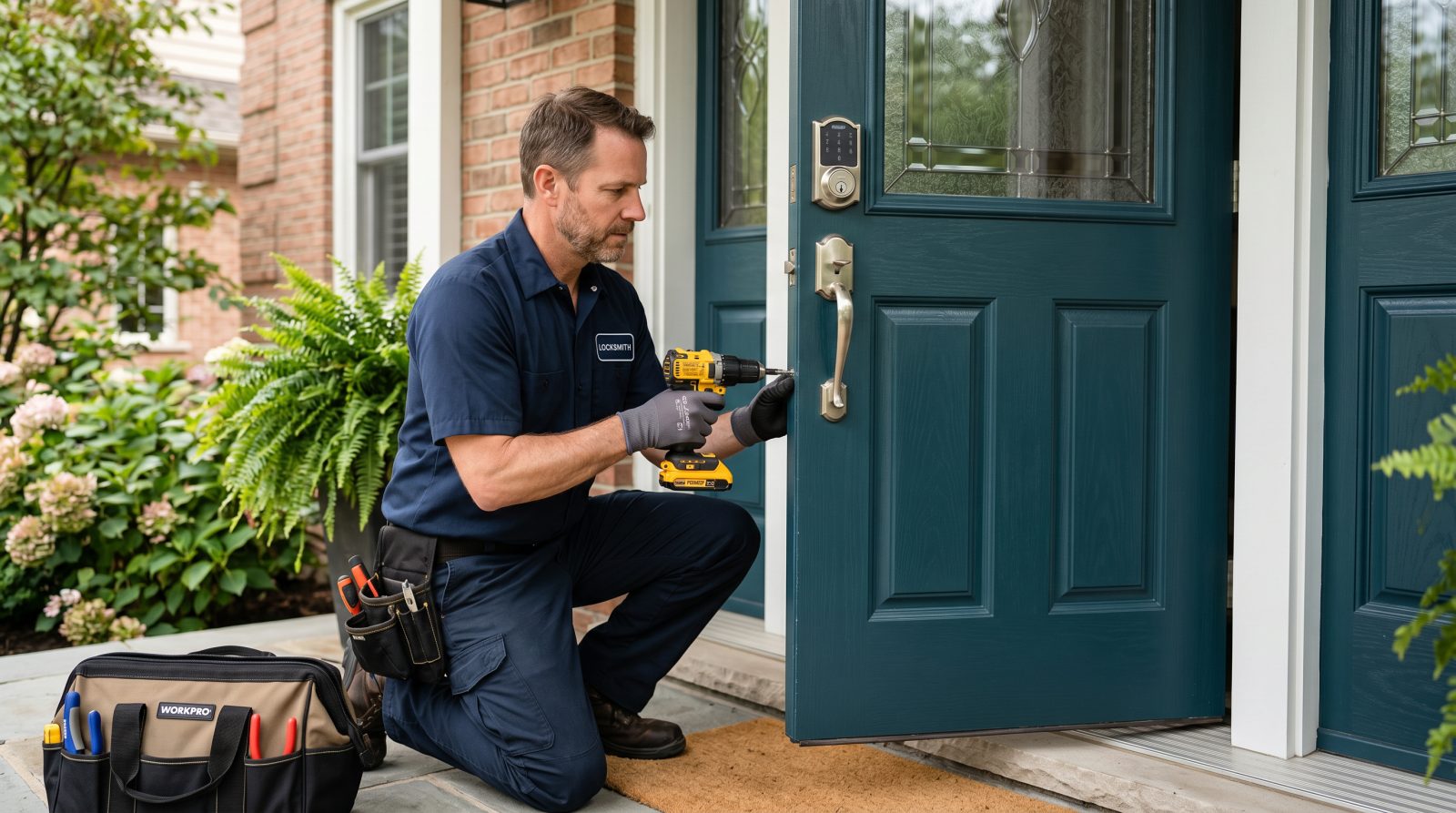
Why a mobile locksmith beats a key-copy kiosk
The self-service key machines you find at hardware stores and grocery stores are designed to trace and cut common household key blanks quickly and cheaply — genuinely useful for a spare front-door key. But those machines are limited by design: no ability to reprogram electronics, no access to restricted blanks, and no technician to catch a bad cut before you're locked out at your own door.
Most vehicles built in the last two decades use keys with an embedded chip that has to be recognized by the car's immobilizer system, not just cut to shape. A kiosk can trace the metal profile, but it has no way to program or sync a chip. A mobile locksmith carries the blanks and programming tools needed, or can point you to the right full-replacement service when programming is required.
Systems like Medeco or Schlage Primus use patented keyways and, often, dealer-authorization requirements so not just anyone can walk up and get a copy made. Kiosks and many general hardware counters don't stock these blanks or carry the authorization to cut them. A locksmith who works with these systems can source the correct blank and, where authorization is required, verify it properly rather than skip the step. The same is true for older or worn keys, which sometimes need hand-fitting to work reliably.
Types of keys we duplicate
We carry blanks and cutting equipment for a wide range of everyday and specialty keys, right in the truck:
- Standard house keys (Kwikset, Schlage, and other common residential brands)
- Deadbolt keys
- Mailbox keys (including cluster/CBU box keys)
- Cabinet and furniture keys
- Padlock keys
- Transponder/chip car keys (simple duplication only — for full replacement with vehicle programming, see our Car Key Replacement service)
How mobile key duplication works
Tell us what kind of key you need duplicated and roughly where you're located in San Jose or the South Bay. We'll give you a straightforward estimate before anyone heads out.
Our mobile setup carries blanks and cutting machines for the key types listed above, so most jobs are handled at your home, office, or wherever is convenient. The locksmith cuts the new key on site and hands it to you directly.
A key that looks right isn't the same as a key that works right. We test each new key in your actual lock or ignition before wrapping up. Some jobs — like keys needing specialized bench equipment or in-depth chip programming — are better suited to a shop visit, and we'll tell you plainly if that's the case.
How much does key duplication cost?
Pricing depends mainly on the type of key and blank required. A standard house, cabinet, or padlock key is inexpensive to duplicate, since the blanks are common and the cut is quick.
High-security restricted keys and transponder/chip car keys cost more, mostly because of the blank itself — restricted and chip-equipped blanks are more expensive to source than a basic brass key blank — plus any additional time for programming or verification.