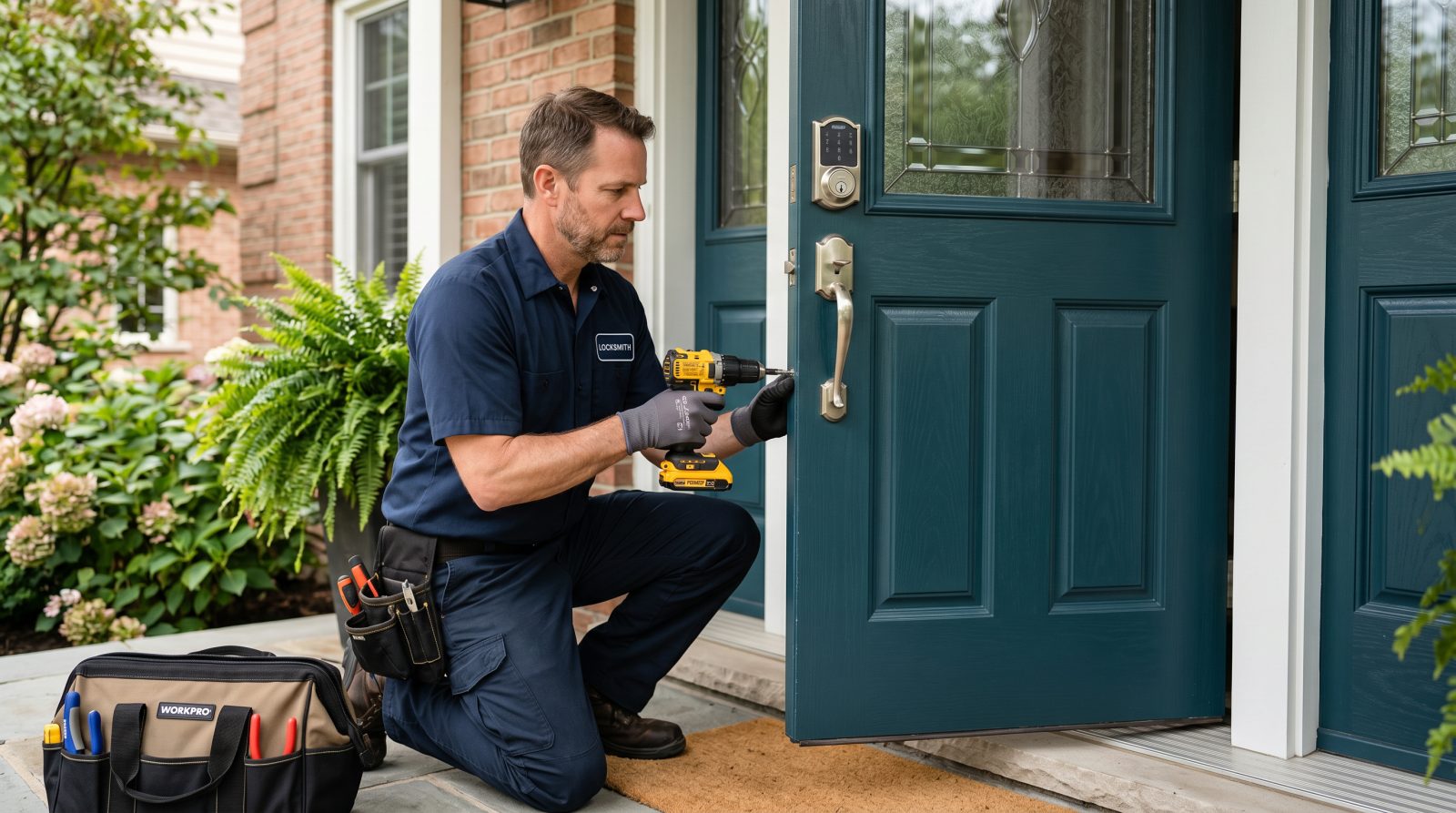
What does a residential locksmith do?
A residential locksmith handles the security hardware on homes — from the moment you're locked out of your own front door to planning a full home security upgrade. The most common calls are lockouts and rekeying, which changes the internal pins of an existing lock so old keys no longer work without replacing the whole lock body. This is the standard move after buying a home, ending a lease, or when you're not sure who still has a copy of your key.
Beyond access issues, residential locksmiths install and replace lock hardware: deadbolts, entry door locksets, sliding door locks, and locks on gates, sheds, and side doors. They repair locks that stick, don't latch properly, or have been damaged. Repair versus replacement is a judgment call based on the lock's age and whether parts are still available — a good locksmith tells you honestly which makes more sense.
Residential locksmiths also handle key duplication, master key systems for households that want one key to open several doors, and increasingly, smart lock installation. Many will also walk through a home's entry points during a service call and point out weak spots, since good residential security is as much about correct installation as it is about the lock itself.
Residential locksmith services we offer in San Jose
- Home lockouts — non-destructive entry to get you back inside quickly
- Rekeying after moving into a new home or apartment
- Deadbolt installation and upgrades
- Lock repair and adjustment for sticking or misaligned hardware
- Key duplication for household and spare keys
- Smart lock installation (keypad, Bluetooth, and app-connected deadbolts)
- Gate and side-door lock installation and repair
- Master key systems for larger homes with multiple entry points
When should you call a residential locksmith?
Moving into a new home is the most common reason to call. You have no way of knowing how many keys are floating around from previous owners, tenants, agents, or contractors, so rekeying the locks — or replacing them if old or damaged — is the standard first step before you settle in.
Lost keys, a break-in or attempted break-in, and general hardware wear are the other frequent triggers. After a break-in, it's worth having a locksmith assess whether the lock and door frame held up or need upgrading. Locks that have simply worn out should be addressed before they fail outright and leave you locked out — or unable to lock the door at all.
Other good reasons to call: you want to move to smart locks for convenience, you're a landlord who needs locks changed between tenants, or you simply want a professional opinion on whether your current hardware is doing its job.
How much does residential locksmith service cost?
Residential locksmith pricing depends mainly on three things: how many locks are involved, the type and grade of hardware, and whether the job is a rekey or a full replacement. Rekeying is generally more affordable since it reuses your existing lock hardware and only changes the internal pins.
Replacement costs more because it includes new hardware plus installation, and that range varies depending on the grade of lock you choose. If you're installing new locks on multiple doors, doing it in one visit is usually more cost-effective than separate calls.
We provide a quote before starting any work, based on number of doors, current hardware, and what you're looking to accomplish, and confirm final pricing on site.
Why choose a mobile residential locksmith?
The main advantage is that the hardware never has to leave your house. A mobile locksmith brings the tools, replacement hardware, and key-cutting equipment to you, so the job gets done in one visit without your home being less secure in the meantime.
It's also more practical for the situations that come up most: a lockout doesn't wait until you can get to a shop, and a same-day rekey after moving in is easier to schedule when the locksmith comes to the house.